
Non-Surgical

TMJ Treatment


TMJ disorder treatment with non-surgical approach.

TMJ TREATMENT

Beyond function,
restoring balance


WHAT IS TMJ DISORDER

Understanding
TMJ disorder


The temporomandibular joint (TMJ), also known as the jaw joint, is the only joint on the face — located below the temporal bones on both sides, just in front of the ear canal. It governs all activities of opening and closing the mouth, including speaking and eating.

TMJ disorder refers to functional impairment of the TMJ — affecting opening, mastication (chewing), and speech — caused by various underlying factors.
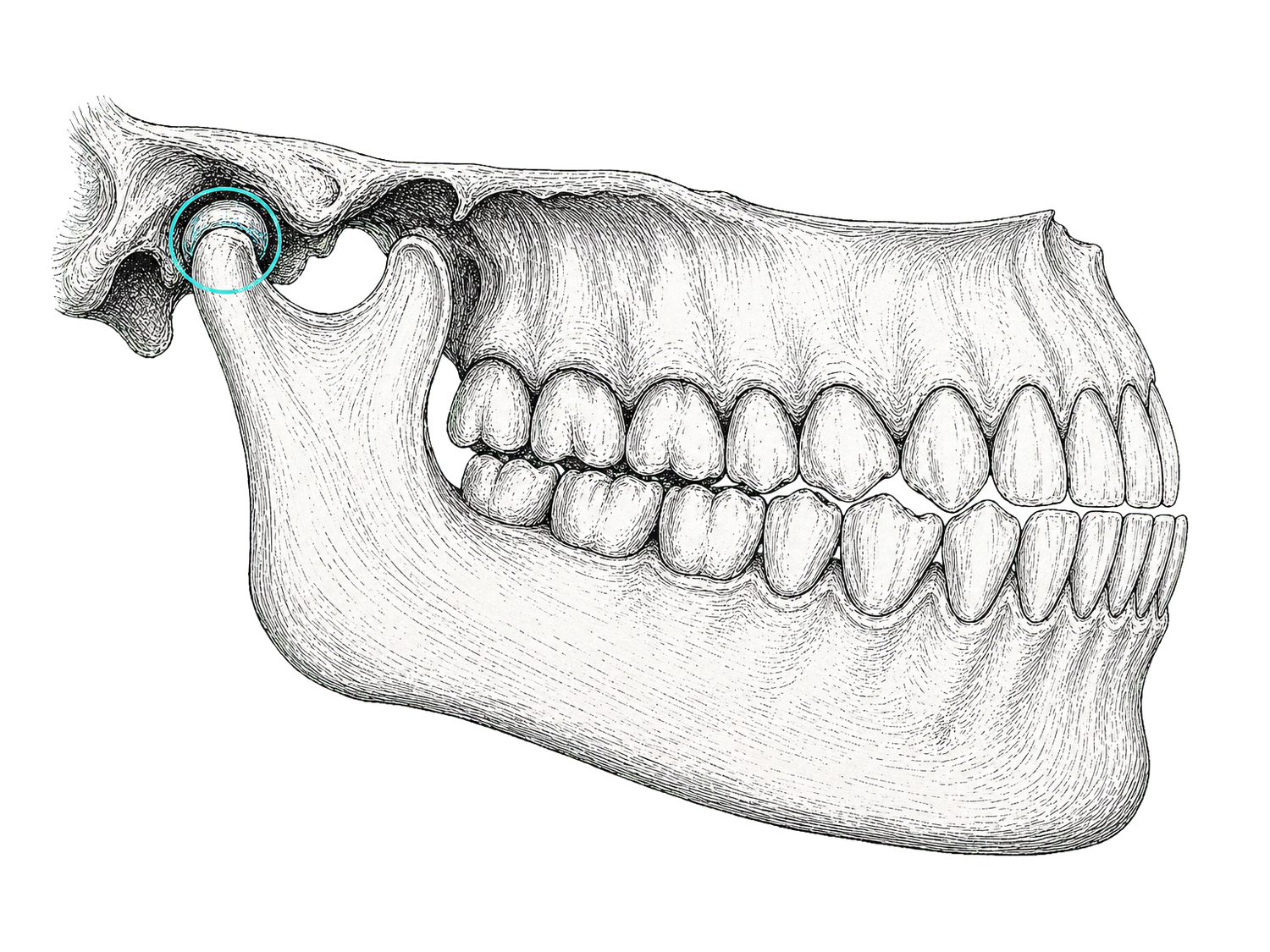
TMJ anatomy — lateral view

SYMPTOMS · 3 SIGNS

TMJ disorder symptoms


  1. Pain in the TMJ — felt in the lower jawbone in front of the ear and in masticatory muscles when chewing or yawning.

  2. Clicking or popping sound in the TMJ when opening the mouth.

  3. Restricted movement of the mouth and jaw.

CAUSES · 6 ITEMS

Common causes


  1. Malocclusion — upper and lower teeth don't meet properly.

  2. Imbalance of teeth and jaw.

  3. Trauma (traffic accidents, bruises, external impact).

  4. Bad oral habits such as teeth clenching or grinding.

  5. Poor sleeping posture or habit of resting jaw on hand.

  6. Hormonal imbalance, psychological factors such as stress.

TREATMENT · 5 OPTIONS

Treatment options


OPTION · 01

Physical Therapy


Highly effective for pain relief and helps stabilize the temporomandibular joint.

OPTION · 02

Behavioral Therapy


Correcting bad oral habits and sleep habits helps stabilize the TMJ.

OPTION · 03

Splint Therapy


Stabilizes the TMJ and bite while relaxing the muscles of the face, head, and neck.

OPTION · 04

Orthodontic Treatment


TMJ issues caused by malocclusion can be treated through orthodontic correction.

OPTION · 05

Restorative / Prosthetic


Partial bite adjustment through restorative or prosthetic treatment to stabilize the TMJ.

CONSULT · NOW

Experiencing TMJ discomfort?


Start with a free consultation.